The Heart of Machinery: Exploring Engine Systems and Industry Innovations
In the world of heavy machinery, engines are the lifeblood that powers construction, agriculture, marine operations, and more. Understanding the core components of these mechanical giants—two critical mechanisms and five essential systems—is key to appreciating their engineering marvel. This article dives into the anatomy of modern engines, highlights leading global brands, and explores cutting-edge trends shaping the industry.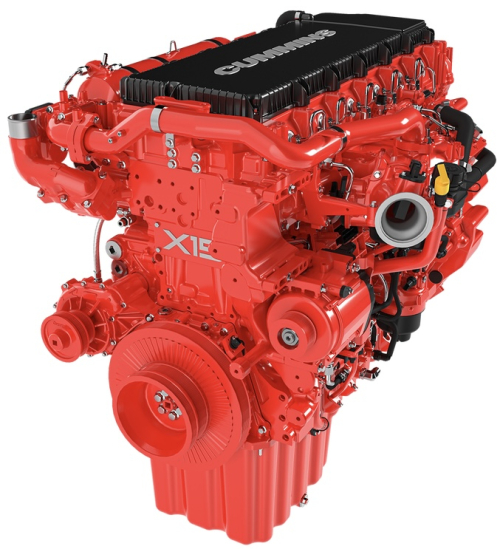
The Crankshaft-Connecting Rod Mechanism is the powerhouse converting thermal energy into mechanical motion. It comprises three main groups:
Cylinder Block Assembly: Houses the cylinder, crankshaft bearings, and cooling channels (e.g., water jackets in water-cooled engines).
Piston and Connecting Rod Assembly: Transforms linear piston motion into rotational force via the crankshaft. Components include pistons, piston rings, and connecting rods.
Crankshaft and Flywheel Assembly: Stores rotational energy and ensures smooth power delivery. High-strength forged steel crankshafts dominate the market, balancing durability and lightweight design.
Industry Spotlight: Brands like Zoomlion have revolutionized crankshaft applications in mega-tonnage cranes, such as the 4,000-ton ZAT40000H crane, which leverages robust crankshaft systems for wind turbine installations.
The Valve Train Mechanism ensures precise timing for air intake and exhaust. Key components include:
Camshaft: Controls valve opening/closing via lobes.
Valves and Springs: Regulate airflow and seal combustion chambers.
Timing Gears/Belts: Synchronize camshaft and crankshaft rotations.
Advanced engines now integrate Variable Valve Timing (VVT) to optimize efficiency under varying loads. For example, Zongshen Group, a leader in motorcycle and small-engine manufacturing, employs precision valve systems to enhance performance in hybrid and traditional engines.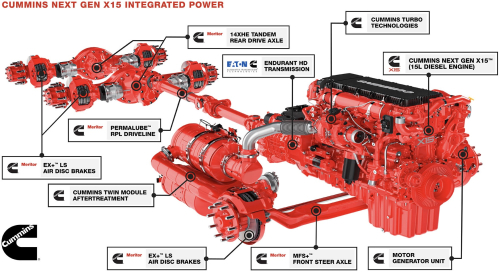
This system delivers the optimal air-fuel mixture to combustion chambers. Diesel engines rely on high-pressure fuel injectors (e.g., Bosch’s common-rail systems), while gasoline engines use electronic fuel injection (EFI) for precision.
Innovation Alert: HD Hyundai Heavy Industries recently partnered with Altair to develop AI-driven simulation tools for eco-friendly marine engines, optimizing fuel efficiency and emissions compliance.
Oil pumps, filters, and channels create protective oil films on moving parts. Sany Heavy Industry’s electric excavators utilize advanced lubrication to reduce friction in high-stress environments, extending component lifespans.
Water-cooled systems dominate, using radiators and thermostats to maintain ideal temperatures. Zoomlion’s LW2800A-200NA crane, designed for extreme conditions, incorporates adaptive cooling to prevent overheating during prolonged operations.
Critical for gasoline engines, spark plugs and coils ignite compressed mixtures. Cummins’ integrated ignition modules ensure reliability in construction equipment, even in sub-zero environments.
Electric starters (e.g., Bosch’s 48V systems) and hybrid solutions are replacing manual cranking. Sany reports a 20% reduction in downtime using IoT-enabled diagnostics to optimize starter performance.
The shift toward electric and hybrid engines is accelerating. Sany launched over 40 electric models in 2024, including excavators powered by lithium iron phosphate (LFP) batteries, cutting emissions by 30%10. Similarly, Zoomlion showcased hybrid mining trucks at CICEE 2025, blending diesel and electric power for heavy-duty tasks2.
Collaborations like Altair and HD Hyundai highlight AI’s role in engine development. Their MoU focuses on virtual prototyping and predictive analytics to slash R&D cycles by 40% while enhancing performance8.
Stricter regulations (e.g., Euro 7) are pushing manufacturers toward lightweight materials and cleaner combustion. Mahle and Thyssenkrupp now produce forged steel crankshafts that reduce engine weight by 15%, aligning with emission targets4.
With $1.2 trillion allocated under the U.S. Infrastructure Act and China’s 6.8 trillion yuan investment, demand for high-efficiency engines in excavators and cranes is surging.
From the precision of valve trains to the rise of AI-optimized designs, engine technology is evolving rapidly. Brands like Zoomlion, Sany, and HD Hyundai are leading the charge toward sustainability and digital integration. For businesses in construction, agriculture, or marine sectors, investing in advanced engines isn’t just about power—it’s about staying competitive in a greener, smarter world.
————————————————————————————————————————————
References: Industry insights derived from leading manufacturers and market reports.
